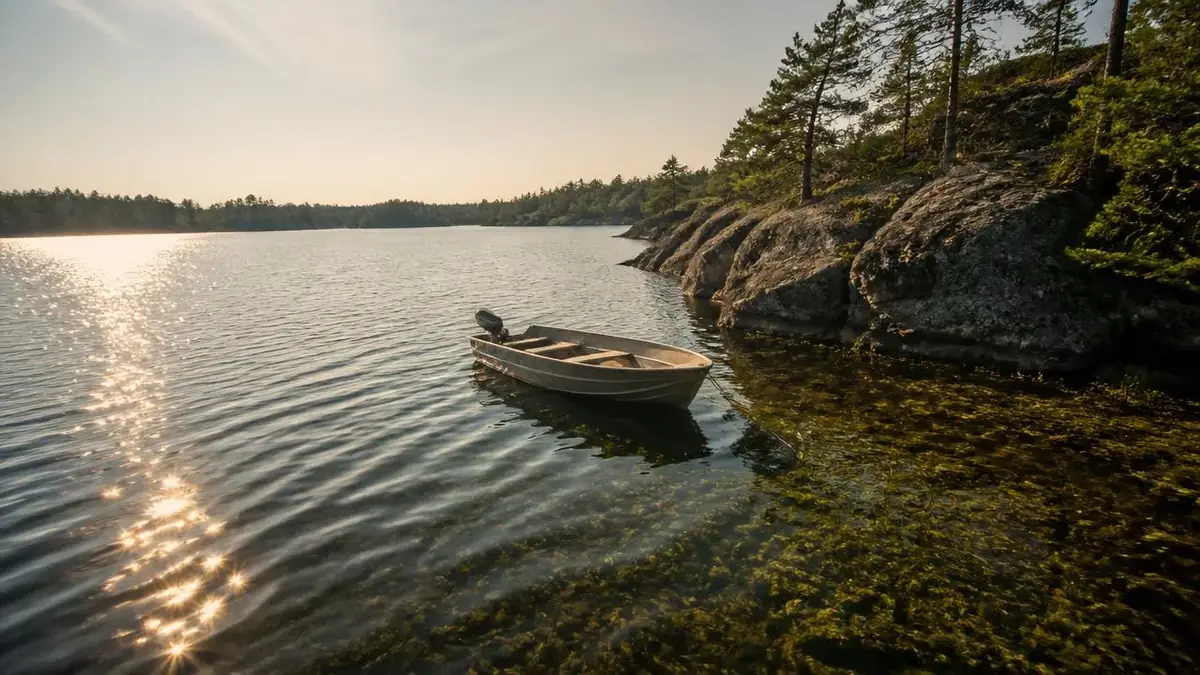
There's a moment on every fly-in trip when the roads disappear. You're in a floatplane, the last gravel road or hydro line slips behind you, and for the next hour there's nothing below but boreal forest, wetlands, and lakes that most people will never see from any other angle.
That moment is the whole appeal of fly-in fishing — and it's worth knowing what the rest of the trip actually looks like before you book one.
A fly-in fishing trip means the lodge or outpost camp you're staying at has no road access. You drive (or fly commercial) to a staging town with a floatplane base, then take a chartered bush plane — usually a de Havilland Beaver or Otter — the rest of the way in. Flight times from the staging town to camp typically run anywhere from 20 minutes to just over an hour, depending on how remote the lake is.
This is what separates fly-in fishing from "drive-to" lodges: there's no other way in or out except by air (or, in some cases, a long boat run). That isolation is exactly what keeps these lakes lightly pressured and full of fish.
Most Northern Ontario fly-in trips stage out of one of a handful of hub towns, each with a floatplane base and commercial or charter air service:
- Red Lake, Ontario — Red Lake Airport (YRL), 51.067°N, 93.789°W
- Sioux Lookout, Ontario — Sioux Lookout Airport (YXL), 50.109°N, 91.903°W
- Kenora, Ontario — Kenora Airport (YQK), 49.788°N, 94.363°W
- Pickle Lake, Ontario — Pickle Lake Airport (YPL), 51.446°N, 90.214°W
- Nakina, Ontario — Nakina Airport (YQN), 50.183°N, 86.698°W
- Thunder Bay, Ontario — Thunder Bay International Airport (YQT), 48.372°N, 89.324°W
To put the geography in perspective, consider Kesagami Lake, one of the province's best-known fly-in destinations for trophy northern pike and walleye. It sits inside Kesagami Provincial Park in the Cochrane District of Northeastern Ontario, at approximately 50.375°N, 80.240°W — a shallow, 208 km² lake roughly 37 km long, reachable only by floatplane out of Cochrane.
That's a useful reference point for what "remote" means on a fly-in trip: you're flying north into genuine wilderness, not just off the beaten path.
- Weight limits matter. Bush planes have strict per-person luggage limits (often 30–50 lbs including gear), so pack light and confirm limits with your outfitter in advance.
- Soft-sided luggage is standard — hard suitcases are difficult to load into a floatplane's hull and storage pods.
- Bring your own tackle, but check whether the lodge rents rods, motors, or boats; many do, which cuts down on what you need to fly in.
- Cash for gratuities and incidentals, since you won't find an ATM once you leave the staging town.
- A valid form of ID and, if applicable, your Ontario fishing licence — most lodges can help arrange licences, but it's worth confirming ahead of time.
Fly-in operations generally fall into two categories:
- Full-service (American Plan) lodges provide meals, housekeeping, and often guided fishing. You show up, fish, eat, and repeat — no cooking or cleaning required.
- Outpost camps (Housekeeping Plan) drop you at a remote cabin stocked with groceries, where you cook your own meals and manage your own days. It's a more self-sufficient, lower-cost way to access the same remote water.
Because these lakes see minimal fishing pressure, walleye and northern pike are typically the most reliable and abundant targets, with many fly-in lakes also holding smallmouth bass, lake trout, brook trout, or muskie depending on the region.
Shore lunch — a shore-side meal of freshly caught fish, usually prepared by a guide — is a fixture of the fly-in experience and worth building into your expectations for at least one day of the trip.
Fly-in trips are often assumed to be far more expensive than they actually are. Housekeeping-plan outpost trips can run in the neighborhood of $1,500–$2,000 per person for a full week, while full-service American Plan lodges cost more but include meals, guiding, and accommodations.
Both options are frequently comparable to — or less than — a week-long international vacation, once flights, food, and activities are factored in.
- Confirm exactly which staging town you'll fly from and how you're expected to get there.
- Ask about baggage weight limits and what gear (boats, motors, rods) is provided versus what you need to bring.
- Clarify American Plan vs. Housekeeping Plan so you know what's included.
- Check current Ontario fishing regulations for the Fisheries Management Zone your destination lake falls in, since limits and seasons vary by zone.
Fly-in fishing isn't complicated once you know the shape of it: drive or fly to a staging town, board a floatplane, and land somewhere the road never reached. The logistics are simpler than they look — and the fishing is usually worth every bit of the trip in.
More fishing near Northern Ontario
Topic Hub
Walleye Fishing Ontario
Everything you need on this topic
Related Articles
Fishing Spots
Top 10 Crown Land Hot Spots Every Ontario Angler Should Know
Free camping, unpressured water, and true wilderness — ten Ontario Crown land regions where you can cast a line without ever seeing another boat.
Fishing Spots
Fishing Ontario's Provincial Parks: A Province-Wide Guide to Casting in Protected Waters
From Algonquin's brook trout to Wabakimi's walleye — how to fish Ontario's best-protected, least-pressured waters.
Regulations
Are Fishing Pressure and Social Media Killing Hidden Lakes?
Geotags, viral videos, and new access roads are eroding the buffer that once kept Ontario's secret lakes secret — and the science backs it up.