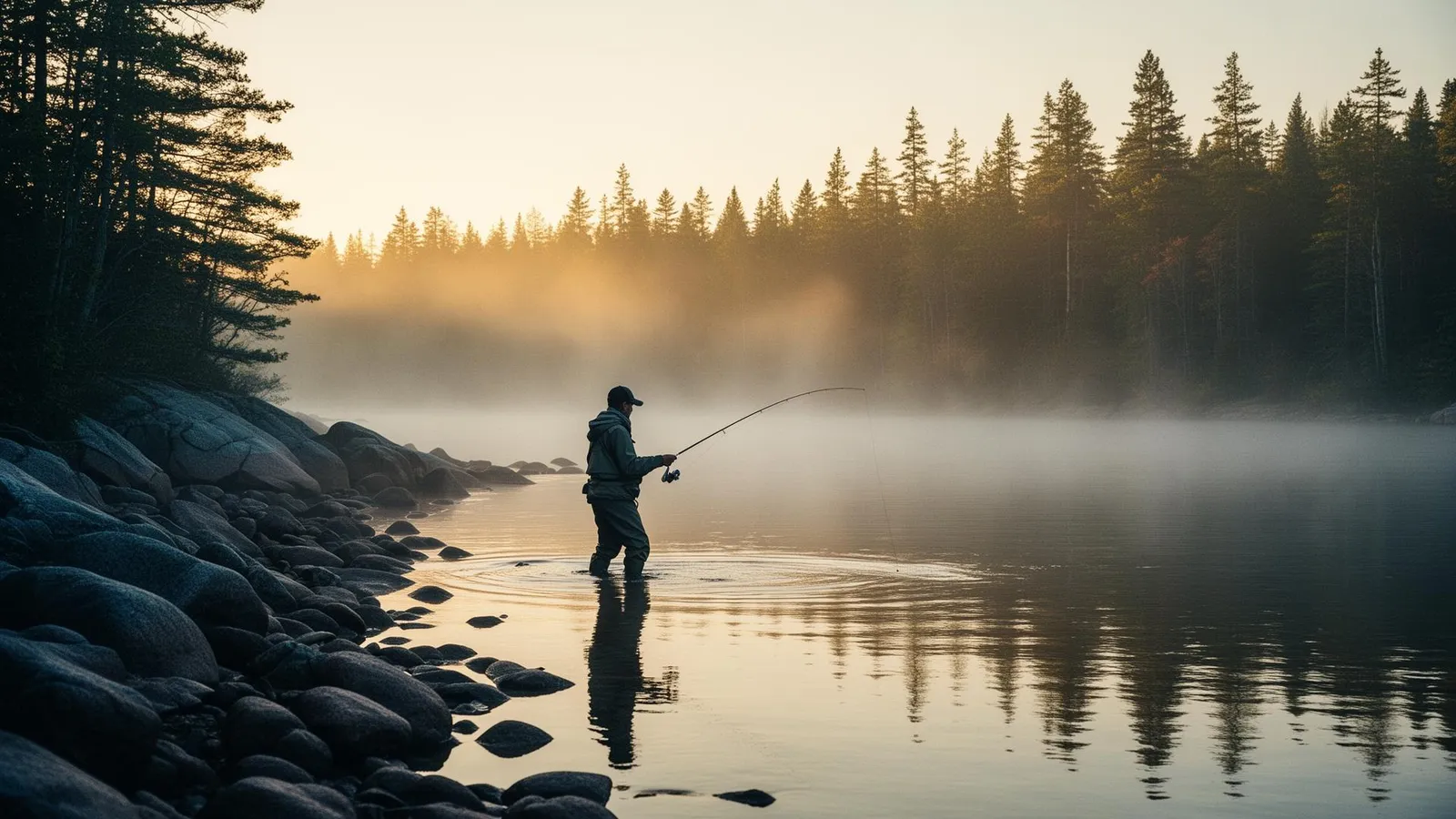
Central Ontario — Muskoka, Haliburton, and the Kawartha Lakes — is one of the best places on the planet to catch smallmouth bass. The region sits right where the granite and rock-strewn lakes of the Canadian Shield meet the warmer, weedier limestone waters to the south, giving anglers two very different but equally productive styles of smallmouth water within an hour or two of Toronto.
Smallmouth bass (Micropterus dolomieu) key in on rock, and Central Ontario has no shortage of it. Muskoka alone has hundreds of rocky lakes offering ideal smallmouth habitat, and biologists describe the local population simply as abundant — smallmouth are present in nearly all the region's lakes and rivers, often in large numbers. Juvenile bass are aggressive enough to be caught right off docks and shorelines, making them a common first fish for kids, while the bigger, warier fish require more deliberate structure fishing in both shallow and deep water.
Smallmouth feed heavily on crayfish, minnows, leeches, and aquatic insects, all of which are most abundant in shallow water — but by the time the season opens in late June, that shallow water has often already warmed past what big smallmouth prefer, pushing trophy fish deeper and onto rocky points, shoals, and drop-offs.
- Smallmouth Bass Species Guide — Biology, size classes and seasonal movement.
- Bass 101: Smallmouth vs. Largemouth — Tell them apart and fish them differently.
- Central Ontario Fishing Spots — Every mapped water in Muskoka and the Kawarthas.
Worth knowing: Ontario's all-time record smallmouth — 4.46 kg (9.84 lb), caught in 1954 near Kinmount — came out of a small lake in the Kawartha region, underlining how good this area's genetics and habitat really are.
- Lake Simcoe — one of the province's premier smallmouth destinations; its rocky shoals produce fish that regularly show up at pro tournament weigh-ins
- Muskoka's "Big Three" (Lake Muskoka, Lake Rosseau, Lake Joseph) — classic Shield lakes with deep, clear, rocky water; smallmouth share the water with lake trout and northern pike
- Kawartha Lakes (Balsam and Sturgeon in particular) — known province-wide for both sheer numbers of smallmouth and legitimate trophy potential; Sturgeon Lake is considered one of the best all-around fisheries in the Kawarthas
- Paudash Lake (Haliburton County, near Bancroft, just south of Algonquin's panhandle) — a well-regarded smallmouth lake with a mix of rock, weed, and wood structure
- Kawartha Lakes Guide — Lake-by-lake breakdown of the Kawartha chain.
- Ontario's Top 5 Bass Lakes — How the region stacks up province-wide.
- Interactive Fishing Map — Launches, depths and FMZ boundaries.
Ontario does not use one province-wide bass opener, and Central Ontario spans more than one Fisheries Management Zone (FMZ), so the date that applies depends on exactly where you're fishing.
FMZ 15 (Haliburton Highlands, Kawarthas, and much of Muskoka) — combined largemouth/smallmouth season opens the fourth Saturday in June (June 27 in 2026) and runs to November 30. Sport limit is 6 bass per day, conservation limit 2, combined for both species.
FMZ 17 and FMZ 18 (parts of eastern/south-central Ontario bordering the region) — bass season opens the third Saturday in June (June 20 in 2026) and runs to December 15, with the same 6/2 sport/conservation split.
Because the boundary between zones — and even between different bays of the same lake — can carry different rules, always confirm your exact FMZ and any lake-specific exceptions using Ontario's Fish ON-Line tool or the current Ontario Recreational Fishing Regulations Summary before you fish. Casting for bass before your zone's opener, even catch-and-release, is treated as fishing during a closed season and is a violation.
- Ontario Fishing Zones Explained — What each FMZ covers and why it matters.
- Ontario Fishing Regulations — Seasons, limits and zone-specific exceptions.
- Bass Opener 2026 — Opener dates zone by zone.
- An Outdoors Card and Ontario Recreational Fishing Licence (Sport or Conservation) is required for most anglers; the Outdoors Card itself runs roughly $9.68 including HST and is valid for up to three years.
- Much of the region — including FMZ 15 — falls inside Ontario's Central Bait Management Zone, meaning live or dead baitfish and leeches cannot be transported into or out of the zone. Dead, preserved bait is exempt from that transport restriction.
- Ontario runs periodic Family Fishing events where Canadian residents can fish without a licence (conservation limits still apply, and ID is required), which can be a good low-cost way to try a Kawartha or Muskoka lake for the first time.
- Ontario Fishing Licence 2026 — Costs, categories and how to buy.
- Outdoors Card Explained — Who needs one and how long it lasts.
Smallmouth in this region key almost entirely on structure and forage.
- Rock is king. Rocky points, shoals, and sunken islands hold fish all season, especially once summer heat pushes bass off open shallow flats.
- Match the crayfish. Once smallmouth reach catchable size, crayfish make up the majority of their diet where available. Brown and blue-green tube jigs, and craw-imitating soft plastics, are proven producers on rocky Shield lakes.
- Finesse works when fish get pressured. The Ned rig — a small mushroom-jig head paired with a short soft stick bait — was popularized on Kawartha-region bass water and remains a go-to when fish are finicky.
- Topwater in early summer, deeper structure in high heat. As surface water warms through July and August, expect the better fish to slide onto deeper rock, drop-offs, and current breaks rather than staying shallow.
- Docks and shoreline wood produce steadily on the Big Three Muskoka lakes and in the weedier Kawarthas, especially for smaller, more aggressive fish.
- Best Bass Lures for Ontario — Tubes, Ned rigs and craw plastics that work here.
- Reading Structure in Ontario — How to pick apart points, shoals and drop-offs.
- Finesse vs. Power Fishing — When to downsize on pressured lakes.
Always verify current season dates, zone boundaries, and waterbody-specific exceptions directly through Ontario's Fish ON-Line tool or the official Ontario Recreational Fishing Regulations Summary before heading out.
- Sturgeon Lake, between Fenelon Falls and Bobcaygeon, is widely considered some of the closest, most consistent smallmouth water in the Kawarthas, with good services on both ends of the lake.
- Muskoka's Big Three run deep (Lake Muskoka reaches roughly 73 m) with rocky, often steep shorelines — good for boat anglers but less forgiving for shore fishing or young kids than the shallower, sandier Kawartha lakes.
- The Trent-Severn Waterway links many of the Kawartha lakes together, so a boat-based trip can realistically cover several different smallmouth lakes (Pigeon, Sturgeon, Balsam, Buckhorn) in a single outing.
- As with any Ontario trip, regulations, sanctuaries, and slot limits can change lake to lake and year to year — the Fish ON-Line tool is the most reliable way to confirm exact rules for the specific water you're heading to.
- Live Fishing Intel — Water temps, wind and bite windows before you launch.
- Weekly Fishing Report — What's actually biting in Central Ontario right now.
More fishing near Kawartha Lakes
Topic Hub
Bass Fishing Ontario
Everything you need on this topic
Related Articles
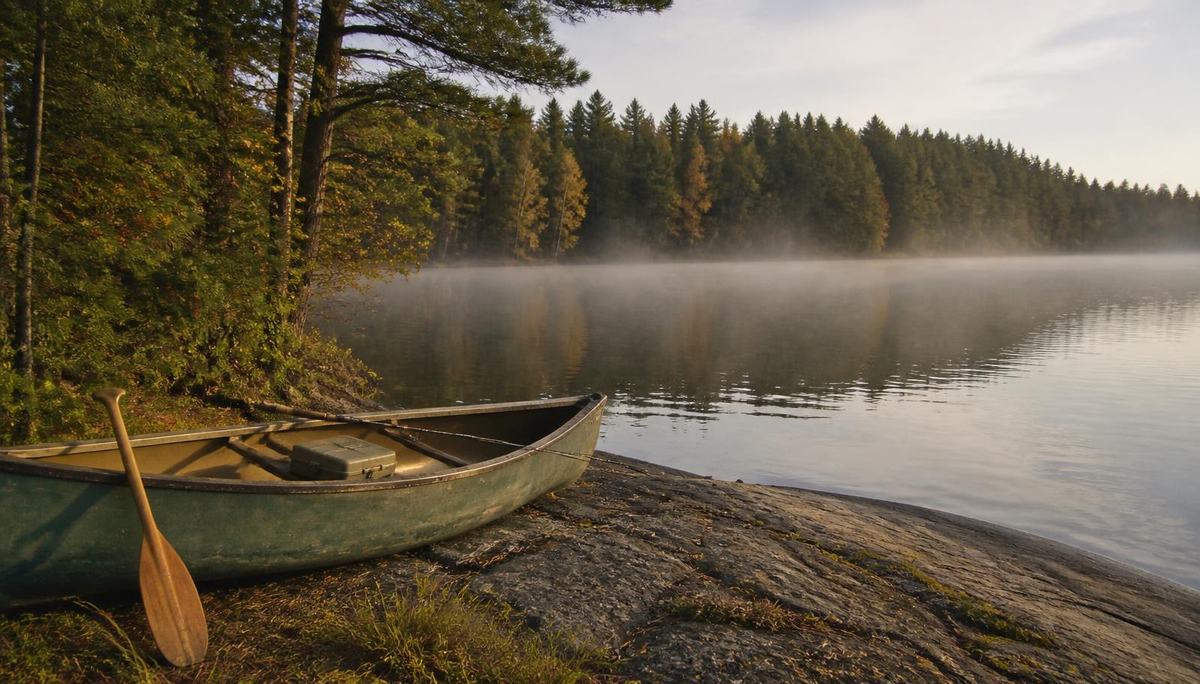
Fishing Spots
The Algonquin Canoe-In Fishing Guide
Where to launch, what's biting, and how to reach the trout water most anglers never see.
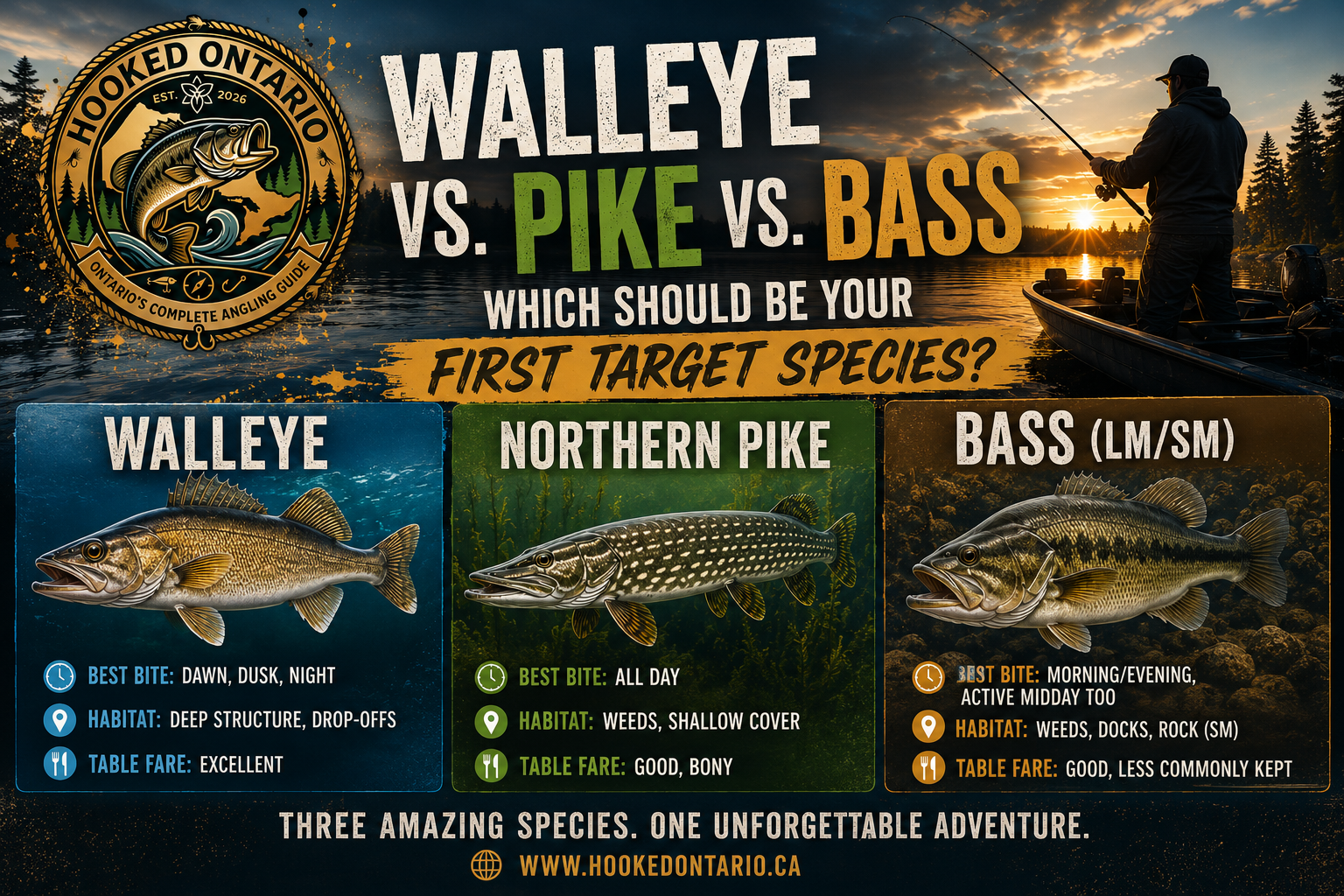
Species Guides
Walleye vs. Pike vs. Bass: Which Should Be Your First Target Species in Ontario?
An honest beginner's breakdown of Ontario's big three — difficulty, bite windows, habitat, gear needs and table fare — so you pick the right species to learn on.
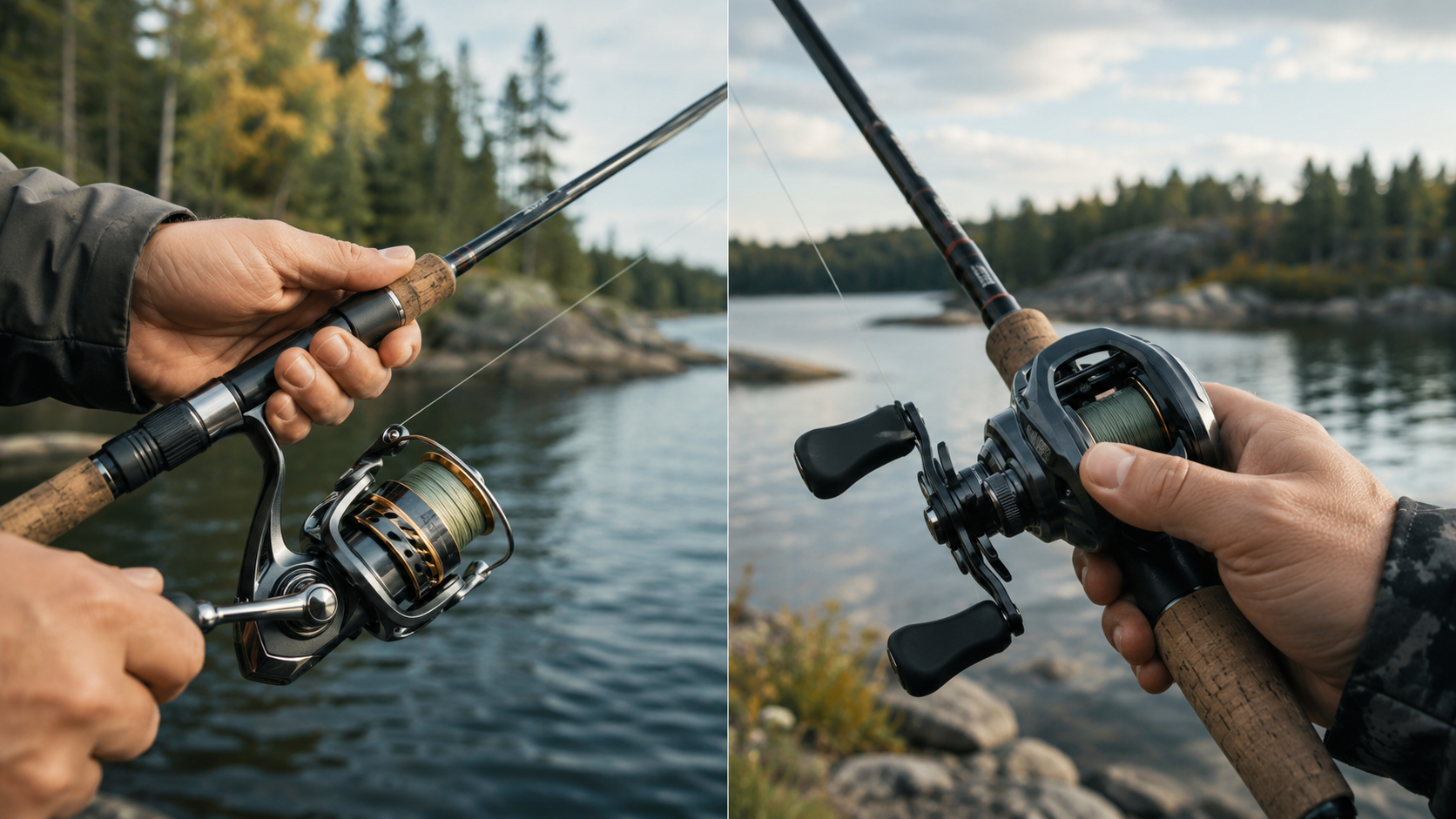
Gear Reviews
Spinning Reel vs. Baitcasting Reel: Which Is Right for Your Ontario Fishing?
How each reel actually works, the honest pros and cons of both, and the best-reviewed spinning reels and baitcasters for walleye, bass, pike and muskie water.