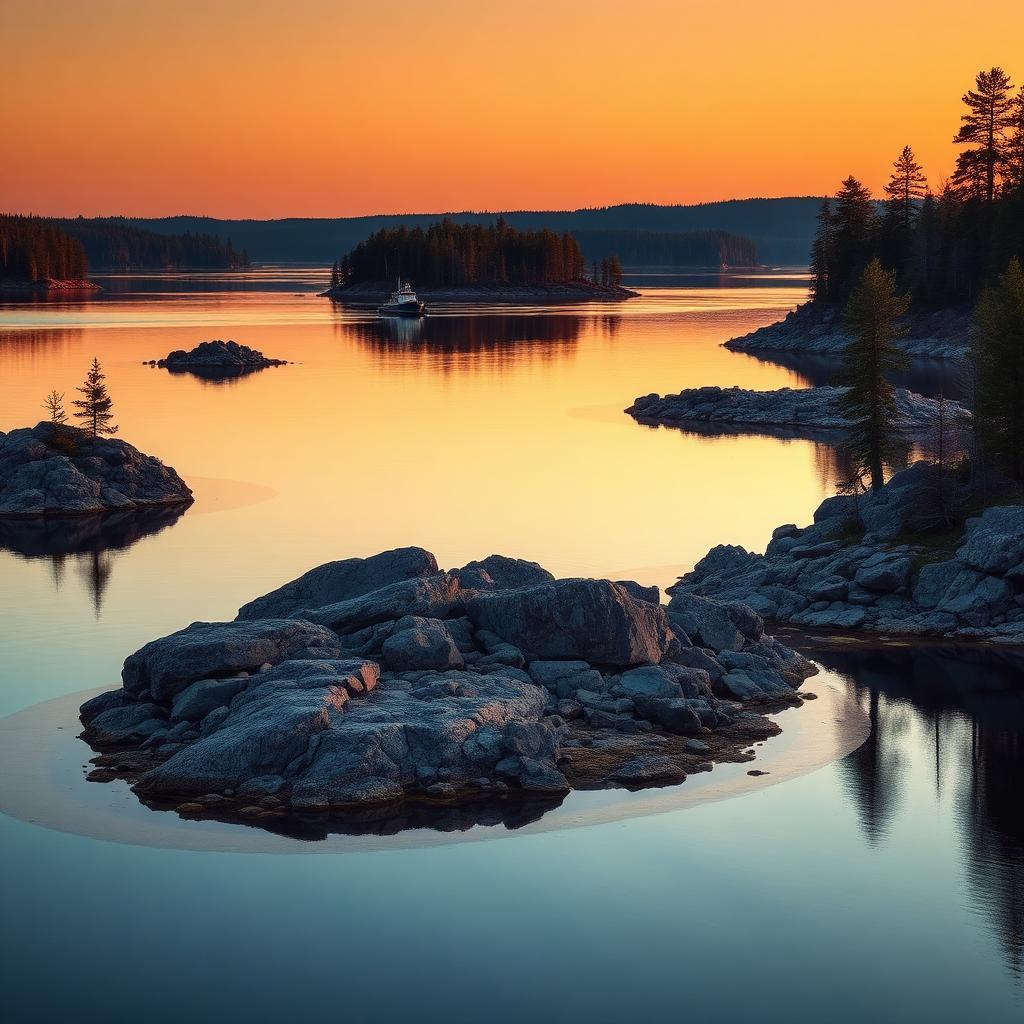
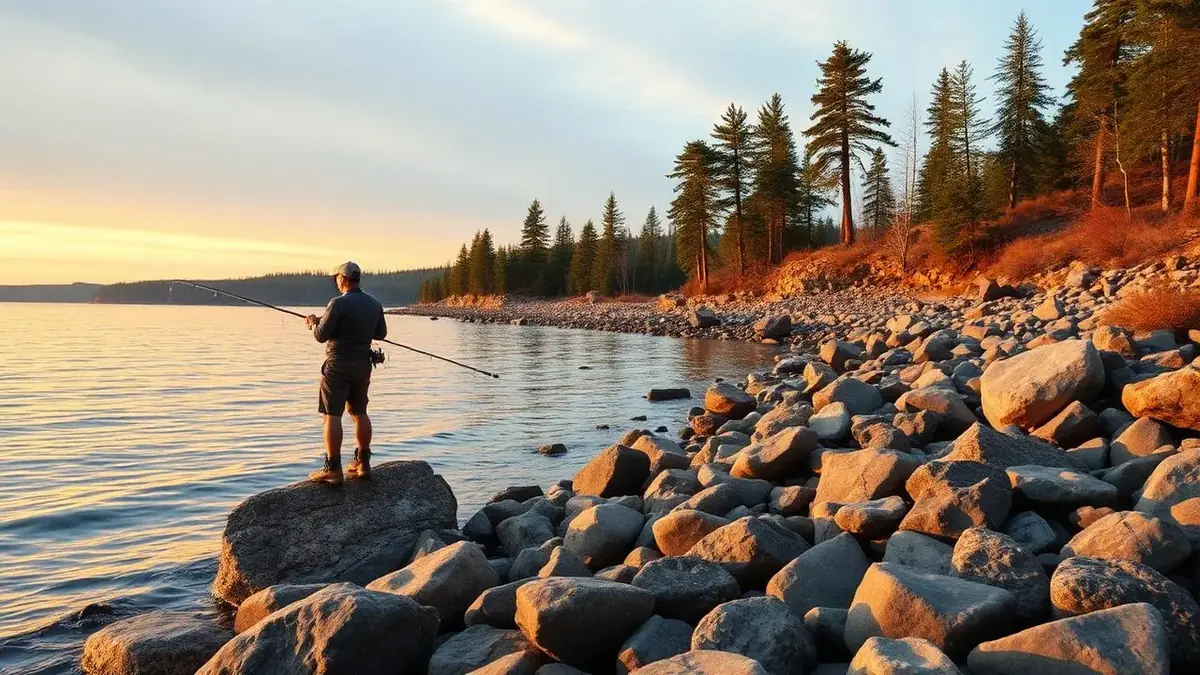
Ontario's Hudson Bay Coast is the province's true far north — a subarctic band of muskeg, tundra rivers, and cold estuaries where the boreal forest thins into wide-open sky. There are no roads in. The only communities are Fort Severn First Nation and Peawanuck (Weenusk First Nation), and the fishing here has more in common with the Northwest Territories than with Kenora or the Kawarthas.
This guide covers what you actually need to know to fish it: the Fisheries Management Zone that governs the whole region, how anglers get in, which species are on offer, and how to plan a trip that respects the Indigenous homeland you'll be a guest on.
The entire Hudson Bay and James Bay lowlands sit inside Fisheries Management Zone 1 (FMZ 1) — the largest and most remote zone in the province. FMZ 1 is managed by the Ontario Ministry of Natural Resources and Forestry with lower daily and possession limits than most southern zones, and season dates that reflect the short northern open-water window (roughly early June to late September on most waters).
Before you go, confirm the current FMZ 1 regulations for your target species — limits, size restrictions, and any exceptions can change season to season.
There are no roads to the Hudson Bay Coast. Access is almost entirely by scheduled or chartered aircraft into two small communities:
- Fort Severn First Nation — Ontario's northernmost community, on the Severn River near Hudson Bay (~55.99°N, 87.63°W). Served by Fort Severn Airport (YER) via scheduled turboprop flights.
- Peawanuck (Weenusk First Nation) — inland from the Winisk River mouth (~54.99°N, 85.44°W). Served by Peawanuck Airport (YPO), with connections from Timmins and Moosonee.
- From either community, most fishing trips continue by boat, canoe, or a short bush-plane hop with a local operator or outfitter.
The Hudson Bay Coast is not the walleye-and-smallmouth country most Ontario anglers picture. The species mix skews cold-water and coastal:
- Brook trout (speckled trout) — the signature fish of the region, running large and unpressured in tundra streams and estuaries. See our brook trout guide for tactics.
- Northern pike — abundant in the Severn, Winisk, and Attawapiskat river systems. Big fish, but often lean compared to southern lakes.
- Lake whitefish and lake trout in deeper inland waters.
- Sea-run brook trout and, in the estuaries, the occasional Arctic char or coaster brook trout run near tidal water.
- Suckers, burbot, and cisco round out the assemblage.
Ice-out on Hudson Bay tributaries typically doesn't happen until late May or early June, and the open-water season is short. Peak brook trout and pike fishing generally runs from mid-June through late August; by mid-September, days shorten fast and freeze-up isn't far behind.
Weather is the biggest planning variable. Even in July, expect temperatures that swing from t-shirt afternoons to near-freezing overnight, with wind off the bay that can pin you down for a day at a time.
The Hudson Bay Coast is the traditional territory and current home of the Cree and Oji-Cree peoples of the Mushkegowuk region. Fort Severn First Nation and Weenusk First Nation are not fishing destinations — they are communities. Fishing here should be planned through community-endorsed outfitters, local guides, or with explicit permission from the First Nation whose lands and waters you're accessing.
Practical starting points: contact the First Nation's band office or economic development contact directly, and defer to local guidance on where to camp, which waters are appropriate to fish, and how to handle and release fish that community members may rely on for food.
- Full cold- and wet-weather layers, even in summer — the coast is subarctic.
- A rugged medium-heavy spinning setup for pike and a lighter 6–7 wt fly rod or medium spinning outfit for brook trout.
- A satellite communicator (Garmin inReach or equivalent) — cell service does not exist outside the two communities.
- Bear-aware camping gear, insect protection (blackflies and mosquitoes are relentless in June and July), and a stove that works in wet, windy conditions.
- Your Ontario fishing licence, ID, and printed copies of FMZ 1 regulations.
Fishing the Hudson Bay Coast isn't a weekend trip — it's an expedition. But for anglers who want to see brook trout the size of small pike, cast for northerns in water almost no one else has fished, and stand on a shoreline where the boreal forest finally gives up and the tundra begins, there's nothing else like it in Ontario.
Do it slowly. Do it through the communities. And bring more warm layers than you think you need.
Related Articles
Fishing Spots
Fly-In Fishing in Northern Ontario: What to Expect
Floatplane bases, staging towns, lodge vs. outpost, packing rules and what the fishing is actually like on Ontario's remote lakes.
Fishing Spots
Ontario's Ultimate Fishing Guide 2025–2026
The Best Lakes for Walleye, Bass, Trout & Pike — 20+ Access Points, Local Tips, Tackle Reviews & Weekend Trip Destinations
Fishing Spots
Georgian Bay Fishing Guide: Ontario's Ultimate Big-Water Adventure
Granite shorelines, the 30,000 Islands, and trophy fish across nearly every major Ontario species.